Forgetfulness. I have never figured out why I can't just remember the important things and let the less important things go. I could tell you all the 150 original Pokemon, but would that be useful for anything at the moment? Heck no. Could I tell you why I forgot to do a simple 250-word blog assignment? No. (I would guess it was because I had to write about my own flaws, who actually likes to talk about their flaws?)
In a business sense, my weakness could make or break a deal. Cause clients to drop. Annoy employees. But thats where I ask for someone of my opposite strengths to come in and take a position to work as partner.
Where I find my strengths is in short, creative bursts. I have ideas that will be an amazing short term expression but after a period of time passes, I want to move on to something else. I wouldn't consider it the "ipod shuffle" effect where I'm just jumping in between thousands of different things in a short amount of time, but I love to dabble in small projects that are big ideas and have my hands in many things at once.
I believe I am at the right place at the right time and I want to excel into an expressive medium where short, creative bursts are important. I suppose the best way to put it would be an "artistic twitter". I'd like to be able to start an idea and have others jump in and help in the process more, I suppose that's why I enjoy the art of remixing so much.
Wednesday, February 10, 2010

John Dimmer, "Raising Capital", and becoming the "Angel" you always wanted to be...
John Dimmer has been putting the money out for over a decade, getting massive returns in his investments. With 22 (or 23) companies currently being invested in, Dimmer has millions of dollars out in Tacoma, Washington, Oregon, and around the world. Having been building up small businesses and preparing those with big ideas, Dimmer has had his hands in many industries, not just in tech but even Honda dealerships, professional indy style racing, and even Round Table Pizza franchises.
Raising the money to start as business, as Dimmer spoke on, doesn't have to be hard. For under $500, anyone with a reasonable idea can speak to an agency such as the TacomaAngel Network with a business proposition and be invested in shortly there after.
Another source of startup money can come from friends and family. Although it might be a much smaller amount, the returns could be extremely high. As Dimmer pointed out, his cousin created a small start-up product in the 90's called "Internet in a box" and was invested in by his uncle with the sum of $25,000. The return was later claimed at over 14 million dollars. Although this is a very rare case, this is just an amazing example of what the return could be like for a member of the family or a close friend.
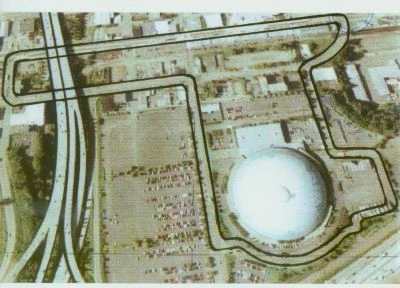
On a side note, I was extremely interested to find out about this fabled "Tacoma Grand Prix" in 1986. With some digging, I actually was able to find some more information on this one time invent and the first NASCAR sanctioned street race.
Bonus: Tacoma Grand Prix layout
Raising the money to start as business, as Dimmer spoke on, doesn't have to be hard. For under $500, anyone with a reasonable idea can speak to an agency such as the TacomaAngel Network with a business proposition and be invested in shortly there after.
Another source of startup money can come from friends and family. Although it might be a much smaller amount, the returns could be extremely high. As Dimmer pointed out, his cousin created a small start-up product in the 90's called "Internet in a box" and was invested in by his uncle with the sum of $25,000. The return was later claimed at over 14 million dollars. Although this is a very rare case, this is just an amazing example of what the return could be like for a member of the family or a close friend.
On a side note, I was extremely interested to find out about this fabled "Tacoma Grand Prix" in 1986. With some digging, I actually was able to find some more information on this one time invent and the first NASCAR sanctioned street race.
Bonus: Tacoma Grand Prix layout
Wednesday, February 3, 2010
John Goodman
John Goodman stopped in this past week and the ideas she dropped set my mind racing with ideas. She definitely gets business, and his been around the block a thousand times over. Everything in her talk was beneficial even while during the Q&A session.
In my mind, the one area that I caught on to was the when she spoke as being the "Producer" of film and how one of her children had brought up the idea in her mind of every plot has been done before, you just need to fill in the key roles and locations. Find a "set", or piece of real estate is important, every business needs a central location in which to meet and collaborate. Breaking the barrier to entry invokes finding the right people to fill key roles within the company. Everyone has a place to build up a product, but you have to be in charge and will be calling the shots. There may be a "director" right below you on the chain of command with a set of advisors whom directs the company to the next goal, but this only comes after a start-up has grown beyond just a few employees. The actors are the employees and will always be the ones who build up the final product. A crew and actors work together perfecting the product, preparing it to go the market. Although this is a very centralized idea, a company needs to follow a plan similar to this in all views to become successful.
Producer > Director > Actors and Crew.
In my mind, the one area that I caught on to was the when she spoke as being the "Producer" of film and how one of her children had brought up the idea in her mind of every plot has been done before, you just need to fill in the key roles and locations. Find a "set", or piece of real estate is important, every business needs a central location in which to meet and collaborate. Breaking the barrier to entry invokes finding the right people to fill key roles within the company. Everyone has a place to build up a product, but you have to be in charge and will be calling the shots. There may be a "director" right below you on the chain of command with a set of advisors whom directs the company to the next goal, but this only comes after a start-up has grown beyond just a few employees. The actors are the employees and will always be the ones who build up the final product. A crew and actors work together perfecting the product, preparing it to go the market. Although this is a very centralized idea, a company needs to follow a plan similar to this in all views to become successful.
Producer > Director > Actors and Crew.
Growth: Time to get some longer jeans and a bigger building...
Within a business I would want to work for, I'm looking for an environment that is inviting for myself and those who work beside me. Heck, who wouldn't want a job where it didn't feel like job and just had fun doing what they love? Desk monkeys are always made fun of in films and tv shows, such as Office Space and The Office. Whatever I chose to focus on for my business, even if it was a business that was bought and not started by myself, I would want it to be somewhere that people longed to work. From business I admire walls and cubicles don't exist. Who wants to be secluded in a box? Humans are naturally drawn to other humans. Why would you want to block out ideas and collaboration on a project and put everyone in a board room when it comes to crunch time? How about everyone is in that environment all the time, creating and growing at the same time. Creating relationships within a company retains employees.A great example of this is the layout is at Bungie Studios (Creators of Halo and its sequels) in Redmond, WA. The only wall that exists is between art and programming for a dividing line. Leveling the playing field for all my base employees would be a starting point. I like to see those who want to exceed, thrive above and beyond the norm. Incentives don't have to mean just cash bonuses.
Inside Bungie: The History Behind the Making of Halo 2
Inside Bungie: The History Behind the Making of Halo 2
Subscribe to:
Posts (Atom)